Point of sale software with the stockroom and the ledger underneath it
Retail and wholesale counters that sell against the same stock record the warehouse reads and post to the same double-entry ledger the accountant closes — across branches, in one login, without a nightly import.
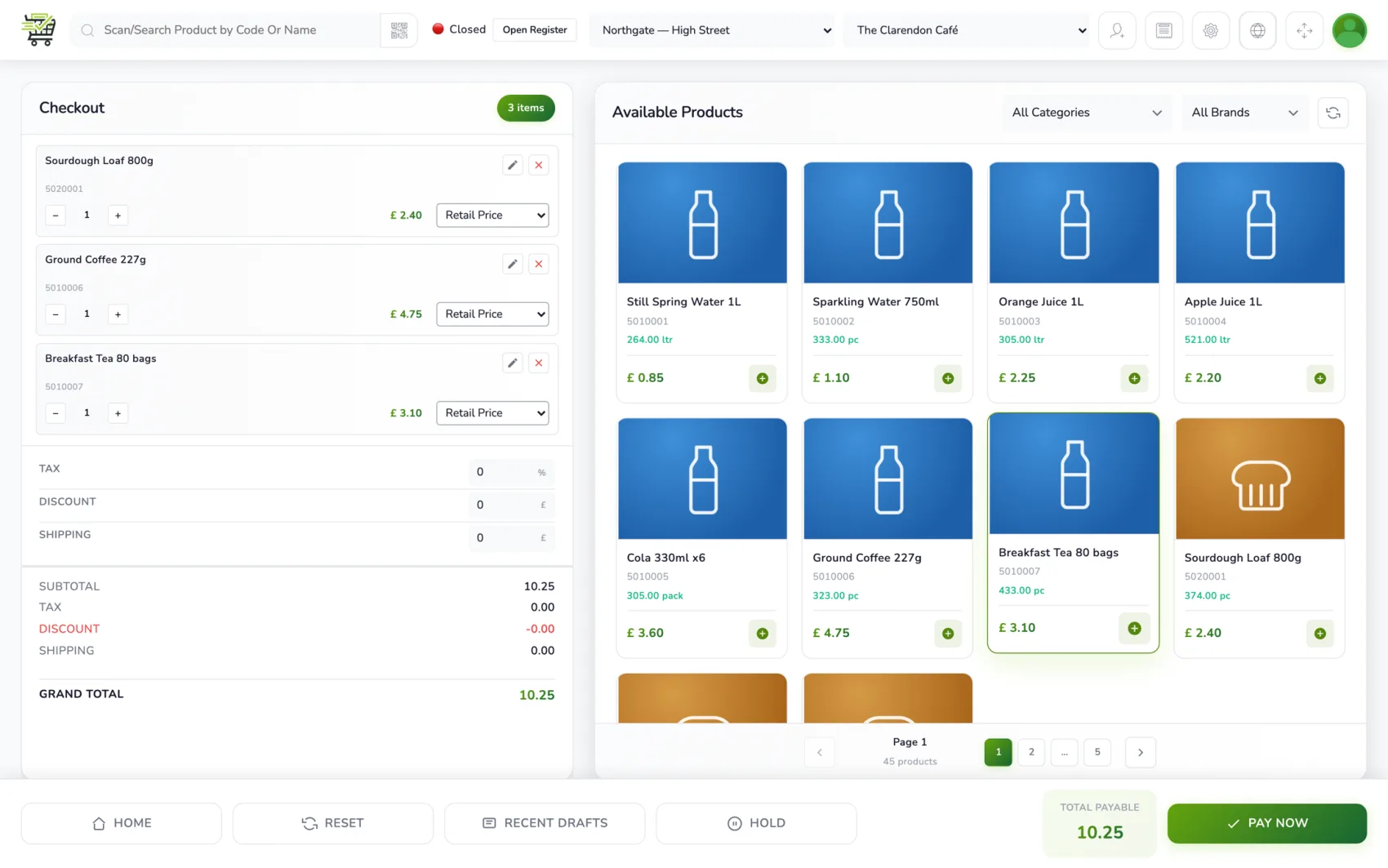
Scan an item and watch three systems agree
The same moment writes a basket line, moves the branch quantity and posts a balanced journal. Nothing queues for tonight, nothing waits on an import, and there is no version of the truth that has not caught up yet.
Ready to scan
—
One event
What the customer pays
What is left on the shelf
What the accounts record
- Nothing to reconcile at close
- Stock is right at the shelf, not tomorrow
- Month end is a review, not a rebuild
What TopOnePOS does
A counter built for speed
Barcode scanner or device camera, keyboard search, held baskets and recent drafts, and a customer-facing second screen that mirrors the basket as it is rung.
Split tender and part refunds
Cash, card, bank transfer, cheque and store credit on one ticket, with returns that reverse the correct tax and cost lines rather than a flat amount.
Register open to register close
Open a drawer with a float, trade against it, and close it against expected cash. The cash register report shows every shift, its variance and the operator who ran it.
Retail, wholesale and floor price
Three prices held per item, chosen per line at the counter, with a minimum the till will not go below — so a negotiated deal is still a deal you can defend.
Stock across branches
Per-warehouse quantities, transfers between them, adjustments, damages and physical stock counts — with negative-stock and low-stock reports that name the item and the branch.
Real double entry underneath
A hierarchical chart of accounts, manual and automatic journal entries, and a trial balance, profit and loss, balance sheet and tax summary that reconcile to it.
Buying as well as selling
Purchase orders, supplier returns, quotations that convert to sales, supplier and customer ledgers, and due tracking on both sides of the business.
Everything else a branch runs on
Employees, shifts, attendance, leave and payroll; assets and depreciation; projects and tasks — on the same login and the same permission model.
Products that are not all the same shape
Variants, combos and bundles, weight and unit conversions, serial and IMEI capture, warranty and guarantee periods, and barcode labels you print in-house.
Fits the market it sells in
Multiple currencies, database-driven translations with full RTL, per-branch tax rules, and ZATCA e-invoicing where Saudi rules apply.
The till posts to a ledger, not to a report
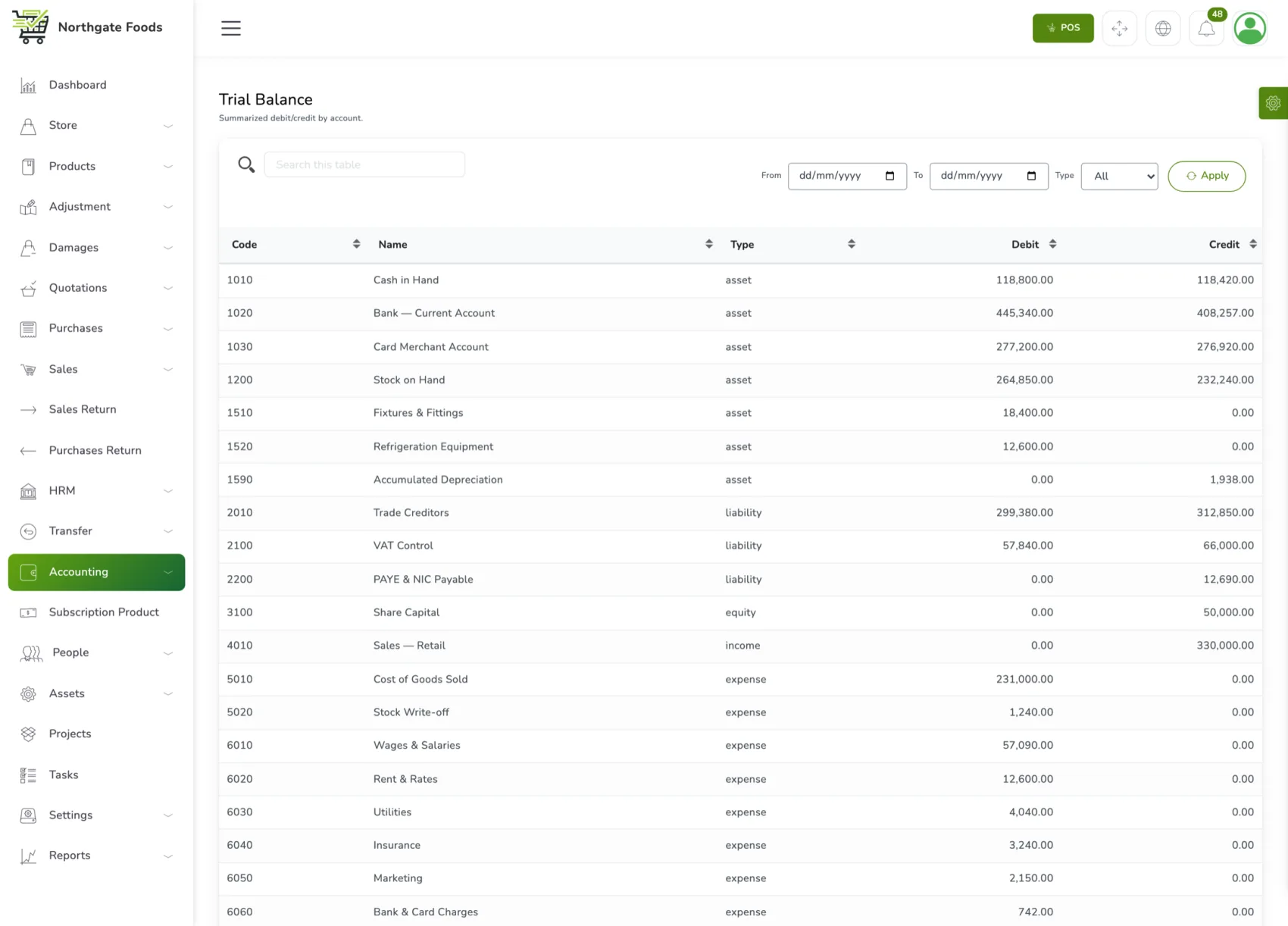
Most point of sale systems produce a sales figure and leave the accounting to a monthly export. This one carries a real chart of accounts, posts journal entries against it, and derives the trial balance, profit and loss and balance sheet from those postings — so the statement a bookkeeper opens is the same data the counter created.
- Hierarchical chart of accounts with parent and child relationships
- Manual journals alongside the ones transactions raise
- Trial balance, P&L, balance sheet and tax summary from one source
- Expenses, deposits and inter-account transfers on the same ledger
One stock record, from the shelf to the accounts
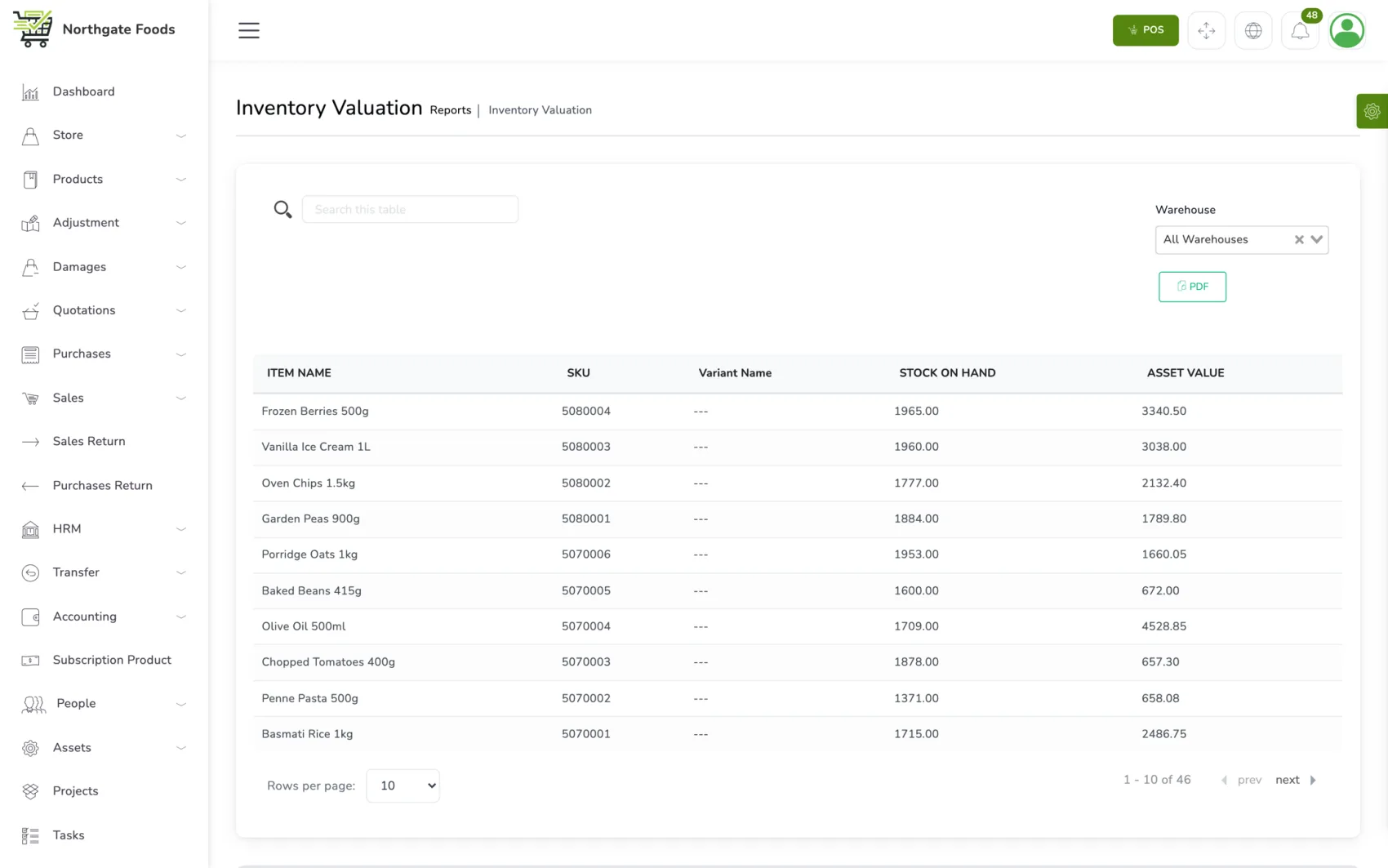
Selling decrements the same record purchasing increments and the valuation report values. There is no staging table and no overnight job, so there is never a window in which the counter, the warehouse and the balance sheet disagree about what is in the building.
- Per-warehouse quantities with transfers, adjustments and damages
- Physical stock counts filtered by category or branch
- Valuation, aging, dead stock and negative stock reported per branch
- Low-stock alerts against a threshold set per product
The whole branch on one login
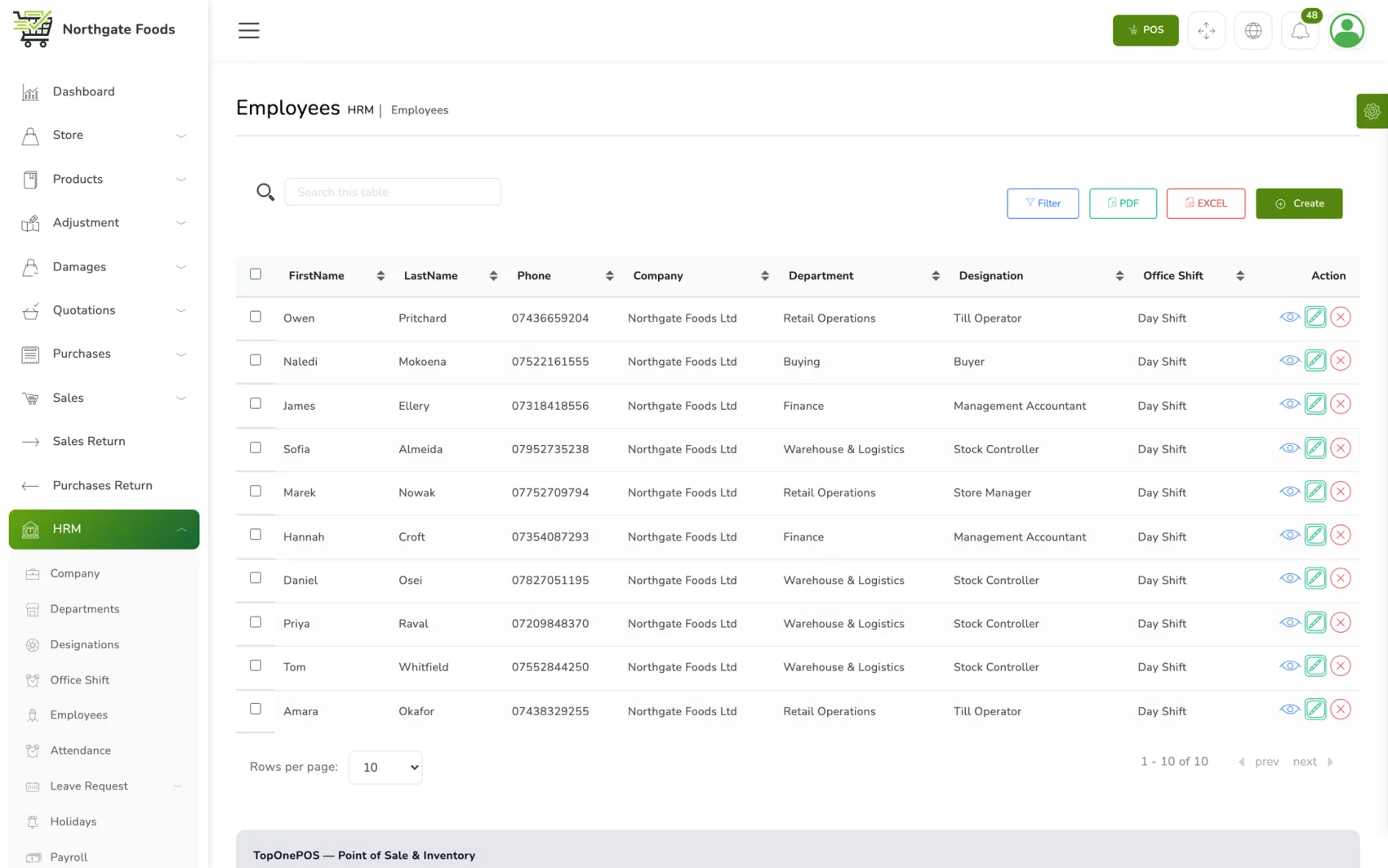
A shop is not only a till. Rotas, attendance, payroll, assets, quotations and supplier accounts usually live in three other systems and a spreadsheet. Here they are modules of the same application, under one role and permission model, so a manager is not reconciling four sources to answer one question.
- Employees, departments, designations, shifts, attendance and payroll
- Assets with categories and depreciation
- Quotations, purchase orders and supplier ledgers
- Roles, granular permissions and per-warehouse user assignment
It is a product, not an island
Every ticket, purchase and journal posts to the same ledger Carventory reads. Switching the counter on does not create a second set of books.
How the platform fits togetherPut the whole business on one platform
Start with one branch and one module. Add the rest when it earns its place — nothing has to be migrated twice.
We reply within one working day · No obligation